Although automobile technology has been greatly improved, it is still better to run in a new car after buying it. The new car running in is conducive to improving performance. How many kilometers does the new car run in period? How do you drive the new car during the running in period? Let's take a look at some driving methods in the new car running in period.
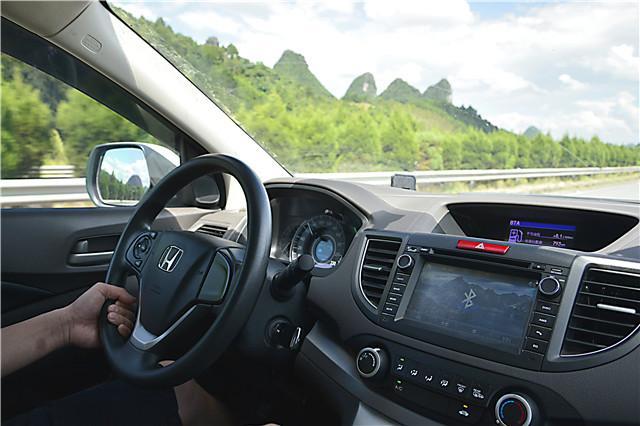
Why do cars need running in?
When the automobile engine works, the piston does reciprocating piston movement in the cylinder, while the transmission works, the two sets of gears mesh with each other, and they will produce friction.
However, before automobile assembly, each part is processed separately, and there are geometric deviation and burr when processing parts. Therefore, after assembly, some running parts will directly contact with each other to produce friction, until the burr of parts is rubbed off and becomes smooth, and there is no deviation between matched parts.
When the car is just bought, the process of wear away the burr and deviation of parts is called running in period, and the cycle of this process is called running in period.
However, it is also said that the current car in the production process has experienced running in, so the owner does not need to run in after buying the car.
Nowadays, most new cars go through "cold running in" before leaving the factory: the engine is installed on a special machine tool and driven by a motor. In this process, most of the burrs on the parts can be worn off. When cold running in, because the engine is not working, there is no fuel combustion to produce high temperature, so it is called cold running in.
However, not all vehicles have experienced "cold running in" before leaving the factory. After all, not all automobile manufacturers have such technical conditions. And "cold running in" for each engine does not mean that further running in is not required. Therefore, most car owners still need to have a certain degree of running in after buying a car.
How many kilometers does the new car run in period take
1. 100-1000 km is a transitional period. The speed should not exceed 4000 rpm. The best speed is within 3000 rpm. When the speed exceeds 100km, you should always pay attention to shifting gears and running in the brake system.
2. Over 1000 km, the speed can be relaxed to 120 km, and the speed should be controlled within 4000 rpm until 2500 km. Gear box running in should pay attention to the use of the second and third gear, do not blindly increase the gear. 2. The running in of gear 3 is good, and the noise will be greatly reduced at 3000 rpm.
3. Over 2500 km, maintenance once, replace the new engine oil filter, change the high-quality oil.
4. The 2500-8000 km stage is mainly the running in period of the gearbox, which can focus on the running in of the third, fourth and fifth gears, such as gradually trying to drive at 4000 rpm in the third, fourth and fifth gears. When starting at ordinary times, pay attention to the excessive turning from 2400 to 3000 in gear 1 and 2.
5. After 10000 km, if you have the chance to drive continuously for 500 km, 110 km and 160 km, you will soon be able to taste the sweetness, that is, the noise of vehicles will be significantly reduced. After running for 5 hours continuously, the running in of engine piston and cylinder is quite complete, forming mirror surface matching and greatly increasing oil film air tightness.
6. After 10000 km, you can try the limit speed. It should be noted that before you try, you must have rich driving experience. In addition to dealing with emergencies, you also have the technology of controlling the car.
Ten points for attention when using new car in running in period
1. After starting the car, we may as well preheat it for 1-2 minutes, which is good for the car, or start slowly when the tachometer drops below 1000rpm.
2. Do not be lazy when driving a manual stop car. Shifting when the shift is necessary. High gear low turn, low gear high turn are all actions to destroy the car.
3. The vehicle maintenance manual has the time and interval for the first maintenance of the new car, so that the new car can be maintained timely. During the running in period, check whether the engine oil, coolant, brake fluid, etc. are sufficient. If any decrease is found, supplement it in time.
4. Pay more attention to the state of the oil, oil color and viscosity is normal? At the same time, it is necessary to timely replace the engine oil that meets the quality grade standard specified by the manufacturer according to the provisions in the maintenance manual. Remember, do not add any "anti-wear additives" to the oil, it will upset the balance of the oil formula, easy to cause engine wear.
5. When adding fuel, add fuel with good quality and cleanliness to the regular gas station to make the vehicle run in and run in more smoothly. At the same time, try to avoid the use of fuel beyond or below the mark, and the vehicle should be added with fuel that meets the requirements.
6. Don't blindly "pull the high speed". Maybe some friends have heard of the saying that "it's faster to grind a car on a high speed", so as soon as you get on the high speed, you will be able to drive to pick up girls after running. But that is not entirely true. During the running in period, the vehicle speed should be limited between 2000-3000 rpm. At the same time, during the running in period, it is better not to exceed the speed per hour
7. If you're on the highway, it's better not to travel more than three hours.
8. New cars can always make others want to rub the impulse, but it is recommended that you drive your car within 1000 km, the general load capacity of the vehicle should not exceed 75% - 80% of the rated load. At the same time, try to choose flat road driving as far as possible.
9. Avoid sudden braking as far as possible, keep safe speed and distance, and operate smoothly.
10. A friend who just came out of the driving school said, "don't get too involved in the drama." think about it as your new car, not a coach car any more. If you treat a new car as a coach car, you will be in trouble.