A kind of the small, commonly known as "know monkey" is a small bug, which has suddenly become the leading role in the news. In media reports, villagers in a certain area of Anhui have become mysterious insect hunters. They catch "know monkeys" in the night for sale, and these "know monkeys" will eventually become a delicious food on the table. Many readers are curious about the past and present life of "knowing monkeys", and more ecological protection people strongly condemn this behavior, and think that capturing and eating "informed monkeys" will endanger ecological balance.
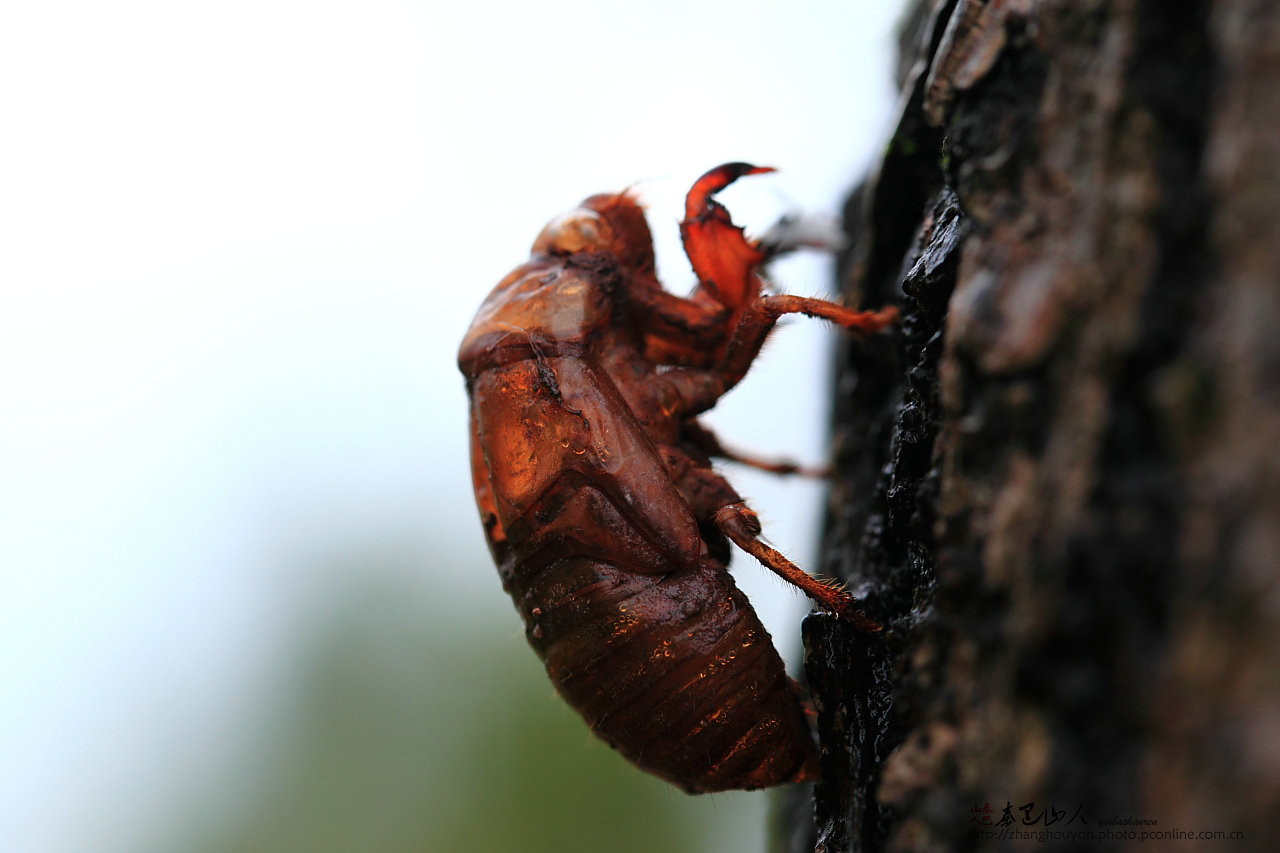
It was mentioned in the news that the "cicada monkey" captured by villagers was actually the mature nymph of cicada. Cicada is a kind of insect in Homoptera. The common species in China are Squilla, Tetrix cicada, pine cold cicada and so on. As an incomplete metamorphosis insect, the nymphs of cicadas will drill into the soil after hatching and rely on the sap from the roots of trees. The growth and development of these small things is very slow. They usually hibernate in underground caves for more than three years. It takes 17 years for a cicada in North America to grow up. In spring and summer, the mature nymph will choose the time to leave the underground cave, climb up the tree trunk or other reliable objects, and emerge into an adult cicada flying freely in the sun. The villagers in the news took advantage of the cicada's habit to stick a round of smooth wide tape on the tree trunk to prevent the nymph from climbing. The cicada nymphs who were ready to emerge had to gather under the tape and be captured.
The nymphs of cicadas usually have a yellow brown protective color, so they are called "golden cicadas" by traders and diners. The golden cicada without eclosion is not only beautiful in color, but also rich in meat. It is a traditional snack in many areas of China, and is also a delicacy in the eyes of gourmands. The golden cicada contains high-quality animal protein and tastes delicious. What's more, it is totally pollution-free in the whole growth process, which can be called pure natural green food. As people increasingly pursue the novel taste of food and safety and health, the original small number of golden cicadas gradually become popular, and the price is also rising. In the early summer of 2015, in some villages in Shandong, Henan, Anhui, Jiangsu and other provinces, tons of golden cicadas were listed every day, and the purchase price reached more than 90 yuan per kilogram. Such attractive prices, in turn, stimulated more villagers to join the ranks of "cicada monkey".
Facing such a strong market demand, many farmers with trees collect or buy branches containing cicada eggs. After the eggs hatch, they scatter the young cicadas in their own trees like sowing. If everything goes well, the cicadas in the soil under the forest will harvest in three years. The trees of cicada cultivation are poplar, willow, apple, pear, peach and other fruit trees as the best. The economic benefits of the cicada are considerable by the annual output of 100 kg of a mu of trees. With the Internet as the platform for technology exchange and product sales, the channels for the acquisition of cicada culture technology and products are gradually mature, and cicada breeding has become a new industry with a model.
However, the fighting power of Chinese food is very strong! In Shandong alone, the number of cicadas trading volume reached more than 5 million kg a few years ago. There are about 200-220 cicadas per kilogram, which means that there are 1-1 billion cicadas falling into the mouths of the diners. The newly started cicada breeding industry can not meet such a strong demand at all. More cicadas are still from the hands of the villagers who grasp the "know monkey" in the news. Because of excessive capture, it is difficult to hear the loud cicadas in some areas in summer. As an important part of the food chain, the decrease of cicada also threatens the survival of predator insects and birds.
In a word, as a traditional food in many areas of China, it is not a problem to know whether monkeys should eat or not. FAO is vigorously advocating the development of insect food, as a kind of natural food resource with wide sources and rich nutrition, and the development and utilization of monkey resources is not useless in itself. We should pay attention to how to enjoy the delicious cicadas while avoiding damaging the ecological environment. It is suggested that the relevant departments limit the over capture of wild cicadas, strictly protect the natural habitat of cicadas, and promote the technological research and development of the cicada breeding industry. Cicada culture does not occupy cultivated land and does not produce pollution, and it is conducive to the protection of wild cicadas, and can become a win-win industry of ecological and economic benefits.